
A Multistakeholder Co-regulatory Model for Digital Governance in ASEAN
This article discusses the insights and challenges regarding digital governance and online safety in the ASEAN region, drawing from a workshop held at the Digital Rights Asia-Pacific Assembly (DRAPAC 2026). It highlights the pitfalls of both platform self-regulation and government overreach, and advocates for an inclusive, human rights-centric, multi-stakeholder co-regulatory model, with specific focus on initiatives in Malaysia and Indonesia.
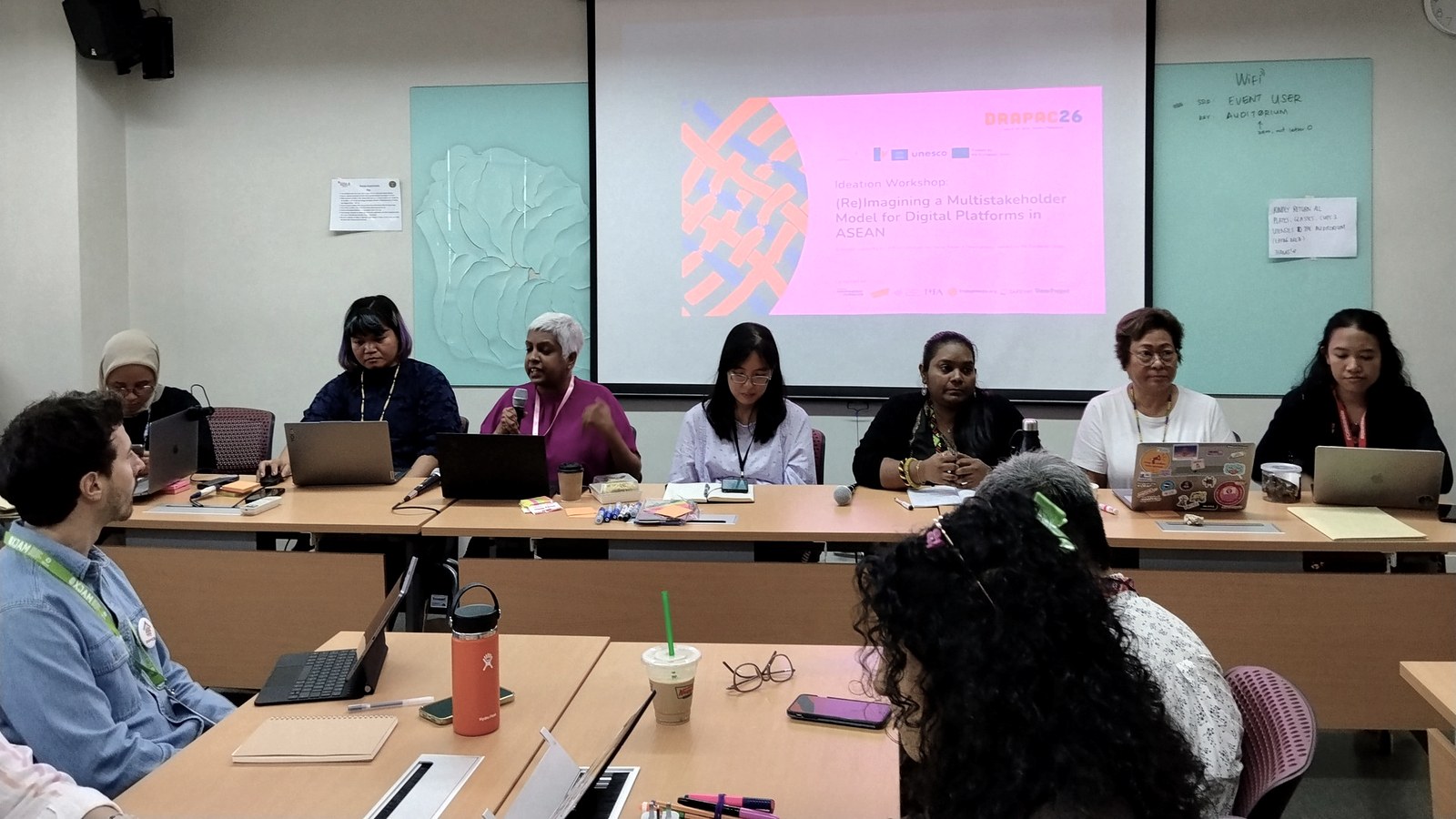
On 10 June 2026, we joined other human rights organisations in the region to co-organise the session “(Re)Imagining a Multistakeholder Model for Digital Platforms in ASEAN” at the Digital Rights Asia-Pacific Assembly (DRAPAC 2026) in Manila. DRAPAC is an annual gathering organised by Engage Media, which first started in 2023, for networking, learning, and collaboration, with a focus on amplifying the voices of those often unheard in digital rights spaces. As part of their efforts to ensure a diversity of voices, fellowships are offered to participants from various countries to promote cross-cultural dialogues and inclusivity. For the three of us, as fellows, this was far more than an external learning experience.
Discussions on establishing an independent, multi-stakeholder mechanism to foster a safer online environment have been progressing concurrently at both the regional and national levels, including in Malaysia, where we are from. This synchronised timeline made the convening in Manila not only a timely opportunity to exchange updates and explore concrete steps to advance such an approach at the ASEAN level, but also to strengthen ongoing efforts towards a co-regulatory, rights-respecting governance model in Malaysia.
The organisations that co-organised this session, had previously convened during DRAPAC 2025 in Kuala Lumpur to take stock of ongoing efforts and regulatory approaches that occurred in the region. Recognising these shared regional trends and concerns, participants came together to deepen their collective knowledge and identify strategic entry points for multistakeholder collaboration.
A multistakeholder approach
While digital technologies have created new possibilities for participation and changed how we share and receive information, the internet’s reach and virality has also accelerated the spread of online harms. In ASEAN, these harms include algorithmic discrimination, ‘hate speech’, xenophobia, and digital abuse, which are further complicated by fragmented regulations and opaque platform operations. Without human rights safeguards and coordinated efforts with government agencies and tech companies, these incidents could further escalate without any long-term solution.
Current responses often fall within two shortcomings: platform self-regulation that fails to adequately address online harms, and regulatory responses from the governments in ASEAN that risk overreach and threaten fundamental rights, including freedom of expression and information, and right to privacy. Ensuring internet safety in this context demands more than reactive content moderation; it calls for a proactive, multi-stakeholder approach grounded in human rights. The ongoing trend that focuses on economic and business interests has caused human rights perspectives to be sidelined.
During the session, we heard about existing efforts, including multistakeholder forums such as the ASEAN-UNESCO platform governance initiatives that informed the development of the ASEAN Guidelines for Digital Platform Governance and created pathways for coordinated implementation. It was also useful to learn about the Damai Coalition in Indonesia that brought together organisations, including civil society groups, research institutions, fact-checkers, and media associations to promote balanced approaches to content moderation and freedom of expression. Together, these initiatives demonstrate that addressing online harms is a shared responsibility that no single actor can shoulder alone.
Key challenges
Despite this growing momentum, participants also reflected on the key challenges of advancing a multistakeholder model within the existing ASEAN human rights mechanisms. The first related to language and specific terms that can restrict meaningful collaboration on critical issues. It was further suggested that engagement with power brokers who utilise human rights language should be explored, given how digital technology affects all aspects of governance.
Participants also highlighted institutional barriers. While some ASEAN bodies were seen as open to engagement, access often depended on existing relationships and networks, making them less accessible to organisations without established connections. Further, there are also concerns over the lack of consultation with civil society organisations on important, cross-cutting issues – such as the Digital Economy Framework Agreement (DEFA), highlighting the urgent need for a more inclusive and transparent engagement process if a multistakeholder governance is to be realised in practice. Apart from that, participants also deliberated on the ongoing trend of a reactionary approach to internet safety and regulation, compared to proactive mechanisms that should be aligned with local nuances and cultural norms.
These challenges, however, are not unique to ASEAN. Similar concerns can also be observed in Malaysia, where consultations on laws and policies have been criticised as tokenistic, prompting civil society to call for more meaningful and inclusive avenues for public input. Minority groups, including ethnic and religious minorities, refugees, and LGBTQI+ communities are often those most affected by hateful and discriminatory actions. It was also highlighted that while many regulatory approaches are framed around child safety, children with lived experiences were not included in the consultative or engagement process. These barriers and exclusions point to the need for greater reflection on how a multistakeholder model can be designed and sustained to ensure diverse perspectives are meaningfully considered while remaining grounded in human rights.
Moving forward
What resulted from the discussion was clear: a strong consensus that future digital governance must shift away from unilateral government over-regulation and insufficient platform self-regulation. The session successfully built on earlier regional discussions laid the groundwork for a co-regulatory model that is inclusive, transparent, and strictly human rights centric.
Since last year, ARTICLE 19, Centre for Independent Journalism (CIJ), and Sinar Project have been working with various stakeholders to develop a multistakeholder model for internet safety in Malaysia. We will soon be convening our third gathering to further shape this co-regulatory approach. The discussions in Manila highlighted similarities between regional hurdles and the challenges we face in Malaysia, while reinforcing the value of collaborative, rights-based governance. As these conversations continue, the lessons from DRAPAC 2026 will help inform and strengthen our efforts to continue building a safer, more inclusive online environment where human rights must remain at the centre of digital governance.
Supported by


Partners